
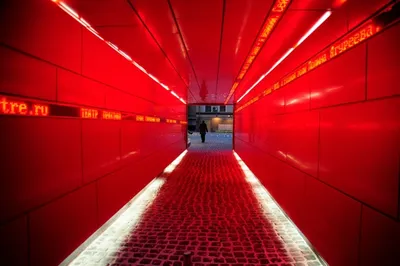
This platform also follows historical and theoretical methods in exploring its hypothesis about how theatre and performance art help people understand and want to solve social problems. Docudramas and theatre for social change in the region include reported speech and documentary material. Actors tell about this material but do not emotionally identify with their roles in way that aligns with Brecht’s theatre, but with a different purpose than didacticism. When actors do not identity with their roles, the burden of the authenticity shifts to audience. Transcripts in post-show Q & A with the audience at documentary theatres (including Teatr.doc in Moscow) reveal which plays have become gateways to social activism. Thus, this platform shows the similarities in goals among recent street protests and documentary drama in the region. Docudramatists collaborate with one another and also with other social activist artists, including Pavel Pavlensky, his former partner Olga Shalygina, and with Pussy Riot. Further, you will see how the goals behind massive street protests in the region continue a dialogue with the anticipations of the protesters in 1989.
Post-show Q&A with audience of New Antigona
The Q&A is a part of every premiere of a docudrama play at Teatr.doc
Андрей Демидов: Акция с футболками была отчаянным жестом этого меньшинства (the group of women). Государство отреагировало как обычно, но необычным был контекст. Осуждены матери, потерявшие своих детей при самых страшных, какие только можно представить, обстоятельствах. Осуждены за явно ненасильственные, не имеющие малейшей общественной угрозы действия. За то, что на месте гибели своих детей позволили себе обвинить в гибели детей президента. И здесь первая параллель с сюжетом Антигоны. Бесчеловечный формальный закон входит в противоречие с живым человеческим законом — законом сострадания.
The above in English
The audience member, Andrei Demidov: The demonstration by the women wearing t-shirts (Путин – палач Беслана / Putin is the executioner of Beslan) was an action that women did out of desperation. The government reacted is it typically does, but the context was unusual. Mothers who lost their children in the most horrific circumstances imaginable were convicted. Convicted for apparently non-violent, non-threatening actions. For allowing themselves to blame the President for the deaths of their children at the scene of their children’s deaths. And here is the first parallel between Sophocles’ Antigone and Teatr.doc’s Novaia Antigona: An inhuman formal, actual law contradicts a living human law, the law of mercy and compassion.
How Estonian Hippies Took Down the Soviet Union
Mikhail Durnenkov
Here the audience discusses the play How Estonian Hippies Took Down the Soviet Union / Как эстонские хиппи разрушили советский союз after the premiere of this play in the style of a play-reading at Teatr.doc. One audience member mentions, “On the one hand, it’s a joke that Estonian hippies destroyed the USSR, but on the other hand, it’s not a joke at all. In a sense they did destroy it. Toppled it. It was on the one hand a trippy free life for the hippies and on the other hand a true battle.” Another audience member found striking connections between this 2018 play and Anatoly Vasiliev’s production of Viktor Slavkin’s The Grown Up Daughter of a Young Man (1979). Slavkin’s Grown Up Daughter and also Cerceau (1987) depict “subaltern groups” and a generation of “people of close-knit community or cult” (люди из общины). In the plays peaceful groups of dissidents break away from the center of culture to move to the periphery, where they can escape cultural norms.
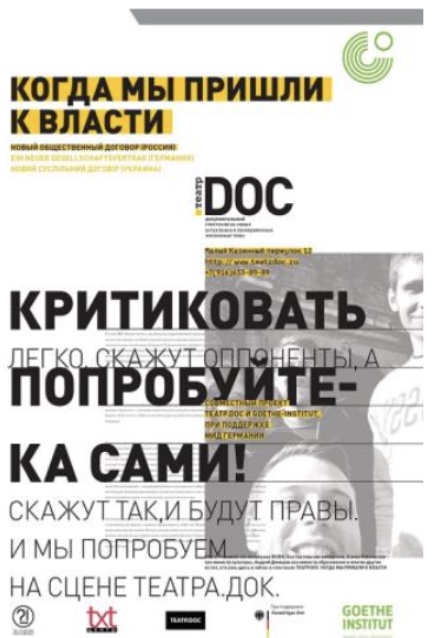
“It’s easy to criticize—try it yourself!» our opponents say. And they’re right: we are trying it ourselves on the stage of Teatr.doc,” as stated on the flyer advertising WHEN WE CAME TO POWER (2017) by Elena Gremina and Mikhail Ugarov. Theplay is based on interviews with those who take it into their own hands to do the deeds and jobs the government isn’t doing.
Plays featuring themes of post-Soviet transition awarded at the annual Liubimovka playwriting festival:
The play “Леша который устроился на работу на которой не платят”by Alexey Bityuckih revolves around the lives of Lesha and Tanya, who struggle financially due to Lesha’s decision to work without pay in pursuit of his dream. Tanya turns to working as an online cam model to support them, which leads to a series of personal and relational challenges. This play highlights themes of economic hardship, the pursuit of dreams, and the impact of financial strain on relationships. These themes are highly relevant to Eastern Europe, where many individuals face economic instability and must navigate the complex interplay between personal aspirations and financial realities.
The play: https://www.youtube.com/watch?v=crXCSI61PL4&list=PL9Pz6qSnYlVGyZvB7vsDft7Eauft3WK6N&index=7
Discussion: https://www.youtube.com/watch?v=08bcMJoQlgc&list=PL9Pz6qSnYlVGyZvB7vsDft7Eauft3WK6N&index=8
The play Топливо by Timur Gainulin revolves around the character of Dima, who has a severe stutter and works as a fuel truck driver. It depicts his struggles with communication and social interaction, portraying the challenges faced by those with speech impairments. The play addresses themes of social isolation and the stigma attached to disabilities, which are highly relevant to Eastern Europe. It sheds light on the everyday struggles of individuals with impairments in a society that often marginalizes them, prompting a discussion about inclusivity and empathy.
The Play: https://www.youtube.com/watch?v=3TiwrgJzhh0&list=PL9Pz6qSnYlVGyZvB7vsDft7Eauft3WK6N&index=28
Discussion: https://www.youtube.com/watch?v=TKDlzh2AD8g&list=PL9Pz6qSnYlVGyZvB7vsDft7Eauft3WK6N&index=29
The play Молоко by Mavromatis tells the story of a man who returns to his childhood home after many years and finds himself grappling with memories and unresolved issues from his past. It explores themes of nostalgia, family dynamics, and the passage of time.This play resonates with the post-Soviet experience in Eastern Europe, where many individuals face a profound sense of nostalgia and displacement. It highlights the struggle to reconcile past and present, a common theme in societies undergoing rapid transformation and grappling with their historical legacies.
The Play: https://www.youtube.com/watch?v=xfa5ajQ-HyU&list=PL9Pz6qSnYlVGyZvB7vsDft7Eauft3WK6N&index=26
Discussion: https://www.youtube.com/watch?v=64JC0nJiIfE&list=PL9Pz6qSnYlVGyZvB7vsDft7Eauft3WK6N&index=27
Post-show Q and A with the audience about plays that include themes of immigration and migrant labor:
Play reading of АЛДАР (Aldar, 2019) by Olzhasa Zhanaidarova
Post-play reading discussion of АЛДАР with the audience: https://www.youtube.com/watch?v=yqAK3filgqU
Play reading of Pilze/по грибы (2019) by Natal’ia Zaitseva:
https://www.youtube.com/watch?v=iLoKBmo-koc&list=PL9Pz6qSnYlVG2M9sgEIlTXO3_F6Gqx0co&index=18
Post-play reading discussion of Pilze/по грибы with the audience:
https://www.youtube.com/watch?v=n69GWHdccmg&list=PL9Pz6qSnYlVG2M9sgEIlTXO3_F6Gqx0co&index=19
Play reading of Магазин (The Shop, 2014) by Olzhasa Zhanaidarova:
Post-play reading discussion of Магазин with the audience:
Play reading of Хач by Ul’iana Gitsareva (2014):
Post-play reading discussion of Хач:
https://www.youtube.com/watch?v=RiNSYo3z2tg&list=PL9Pz6qSnYlVGy0yCcYTarctO4G98ZzDSI&index=58
Post-show Q and A with the audience about plays that include themes of gender and ageism:
Post-reading discussion of ГЛИНА (2019) by Ekaterina Bronnikova:
https://www.youtube.com/watch?v=ssTUypb2s3c&list=PL9Pz6qSnYlVG2M9sgEIlTXO3_F6Gqx0co&index=35
Play reading of Мне тяжело об этом говорить (It’s Hard for me to Talk about It, 2019) by Angie Gizzatova:
Post-play reading discussion of Мне тяжело об этом говорить with the audience:
Play reading of Х*** моего старшего брата (My Older Brother’s D***, 2018) by Вадим Кирсанов:
https://www.youtube.com/watch?v=AIRD3AM8TLk&list=PL9Pz6qSnYlVHEiX1uoTdm7Q49jZqDV2yQ&index=32
Post-play reading discussion of Х*** моего старшего брата with the audience:https://www.youtube.com/watch?v=mUn5OsfTdNc&list=PL9Pz6qSnYlVHEiX1uoTdm7Q49jZqDV2yQ&index=33
Play reading of 28 Дней (28 Days, 2018) by Olga Shiliaeva:
Post-play reading discussion of 28 Дней with the audience:https://www.youtube.com/watch?v=RLQQ3BcsPF8&list=PL9Pz6qSnYlVHEiX1uoTdm7Q49jZqDV2yQ&index=57
Play reading of Подвал (The Basement, 2014) by Natal’ia Milant’eva:
Post-play reading discussion of Подвал: https://www.youtube.com/watch?v=Uo1tuB2wrhQ&list=PL9Pz6qSnYlVGy0yCcYTarctO4G98ZzDSI&index=37
Моя старость (My Age, 2015) by Taya Sapurina. The social meaning of the play lies in its reflection on the often overlooked aspects of aging, loneliness, and the dignity of the elderly, highlighting their inner worlds and the complexity of their experiences. Here is its play reading:
Post-play reading discussion of Моя старость: https://www.youtube.com/watch?v=PVGYVfmeMpQ&list=PL9Pz6qSnYlVFiqZwqhWthfzRy4doLf0RR&index=44
Post-show Q and A with the audience about plays that include themes of corruption and “us” versus the system:
Play reading of Чихуахуа (2015) Ivan Andreev: This play highlights themes of social decay, mistrust, and the dehumanizing effects of a surveillance state. The play centers around characters with criminal backgrounds and explores how societal norms and state control impact their lives and relationships. In Eastern Europe, this story resonates deeply due to historical and contemporary experiences with authoritarian regimes, pervasive state surveillance, and the erosion of community trust: https://www.youtube.com/watch?v=aFhC4lpvMbw&list=PL9Pz6qSnYlVFiqZwqhWthfzRy4doLf0RR&index=50
Post-play reading discussion of Чихуахуа:
Play reading of Феномен выученной беспомощности (The Phenomenon of Learned Helplessness, 2015) by Natasha Borenko blends documentary elements with personal correspondences. The play is about the intricacies of human connections, emphasizing the unconscious patterns that govern behaviors and the struggle for autonomy: https://www.youtube.com/watch?v=GF1SiwjWE-M&list=PL9Pz6qSnYlVFiqZwqhWthfzRy4doLf0RR&index=11
Post-play reading discussion Феномен выученной беспомощности:
Play reading of Невеста (The Bride, 2015) by Elena Shabalina (2015): This play revolves around the life of Ivan, a truck driver, and his relationship with Alla. It explores themes of loss, spirituality, and the search for meaning amidst life’s challenges. The narrative highlights the fragility of human connections and the profound impact of spiritual beliefs on coping with grief and existential questions. The play reflects the societal context of Eastern Europe by delving into the everyday lives and struggles of ordinary people: https://www.youtube.com/watch?v=VCnyqzcjtL0&list=PL9Pz6qSnYlVFiqZwqhWthfzRy4doLf0RR&index=57
Post-play reading discussion of Невеста:
https://www.youtube.com/watch?v=1Vi59B3_pss&list=PL9Pz6qSnYlVFiqZwqhWthfzRy4doLf0RR&index=58
Play reading of Моя милиция меня (My Militia has Got Me, 2014) by Tatiana Kitsenko:
Post-play reading discussion of Моя милиция меня with the audience:
Play reading of Неровные кончики (Split Ends, 2014), by Galina Zhuravleva, is centered around Svetlana, a thirty-year-old woman reflecting on her life. The narrative unfolds in a kitchen reminiscent of the Soviet era, highlighting themes of envy, aspiration, and the contrasting life choices between Svetlana and her best friend. Svetlana grapples with frustration and jealousy as she sees her friend pursuing dreams that she herself has abandoned. The play explores deeper issues of self-worth and the pursuit of personal happiness against the backdrop of economic and social realities in contemporary Russia:
Post-play reading discussion of Неровные кончики:
Other awarded plays about topics of social activism:
Привези мне из Львова чего в Запорожье нет / Get me from Lvov what We Don’t Have in Zaporozhe (2015) by Anastasia Kosodii. This play centers around characters struggling with the realities of the war in Eastern Ukraine. It highlights the psychological and emotional strain on individuals and communities caught in ongoing conflict, emphasizing themes of survival, identity, and the search for meaning amidst chaos. Here is its play reading: https://www.youtube.com/watch?v=VvMsWEo-N4I&list=PL9Pz6qSnYlVFiqZwqhWthfzRy4doLf0RR&index=46
Post-reading discussion of Привези мне из Львова: https://www.youtube.com/watch?v=i3YmTKSbmDY&list=PL9Pz6qSnYlVFiqZwqhWthfzRy4doLf0RR&index=45
This platform also follows historical and theoretical methods in exploring its hypothesis about how theatre and performance art help people understand and want to solve social problems. Docudramas and theatre for social change in the region include reported speech and documentary material. Actors tell about this material but do not emotionally identify with their roles in way that aligns with Brecht’s theatre, but with a different purpose than didacticism. When actors do not identity with their roles, the burden of the authenticity shifts to audience. Transcripts in post-show Q & A with the audience at documentary theatres (including Teatr.doc in Moscow) reveal which plays have become gateways to social activism. Thus, this platform shows the similarities in goals among recent street protests and documentary drama in the region.
Docudramatists collaborate with one another and also with other social activist artists, including Pavel Pavlensky, his former partner Olga Shalygina, and with Pussy Riot.
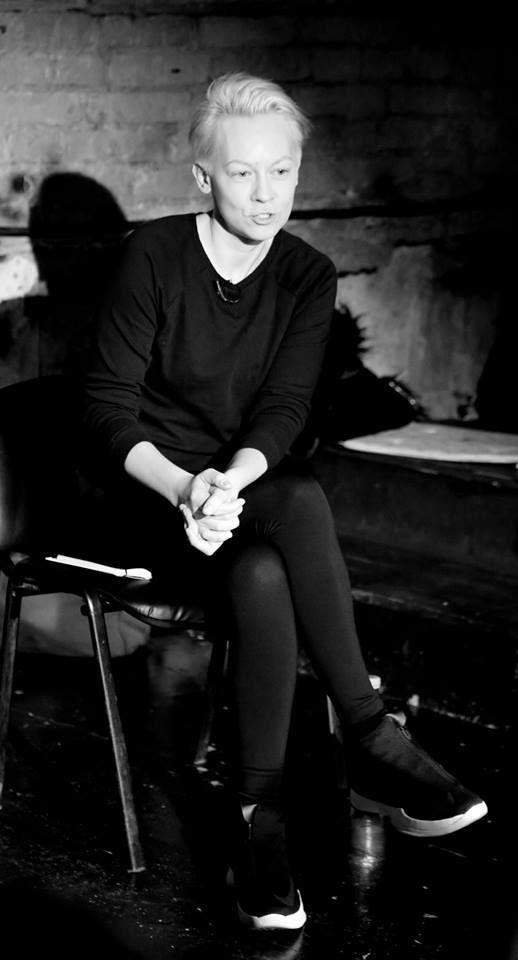
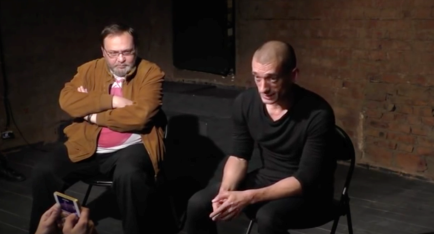
Teatr.doc, in Moscow, is a hub of political art-making. On March 8, 2016 Teatr.doc hosted a Question-&-Answer session with Olga Shalygina, who is the wife of protest-artist Pavel Pavlensky. He was also interviewed at Teatr.doc by the late Mikhail Ugarov, Teatr.doc co-founder.
Further, you will see how the goals behind massive street protests in the region continue a dialogue with the anticipations of the protesters in 1989.